
Organizing a trip involves balancing dozens of variables: transport, accommodation, duration, budget, timing. The difference between a trip endured and a successful trip rarely lies in the chosen destination. It lies in the preparation method and, increasingly, in the ability to integrate constraints that traditional guides do not mention, such as access restrictions related to tourist overcrowding.
Quotas and mandatory reservations: the constraint that changes the itinerary
Several heavily visited cities and natural sites now impose visitor quotas, timed reservations, or increased entry fees. According to an article from ABC News Australia published on September 20, 2026, these measures are multiplying to limit pressure on local infrastructure and natural spaces.
This evolution has a direct impact on how to organize a trip. Booking accommodation is no longer enough: it is necessary to check, sometimes several months in advance, if the targeted site requires prior registration or applies a daily cap. Ignoring this step can turn a long-planned day into a closed waiting line.
Checking access restrictions before finalizing an itinerary has become as common as checking the weather. Platforms like Allers Retours allow users to explore destinations and cross-reference practical information before building an itinerary.
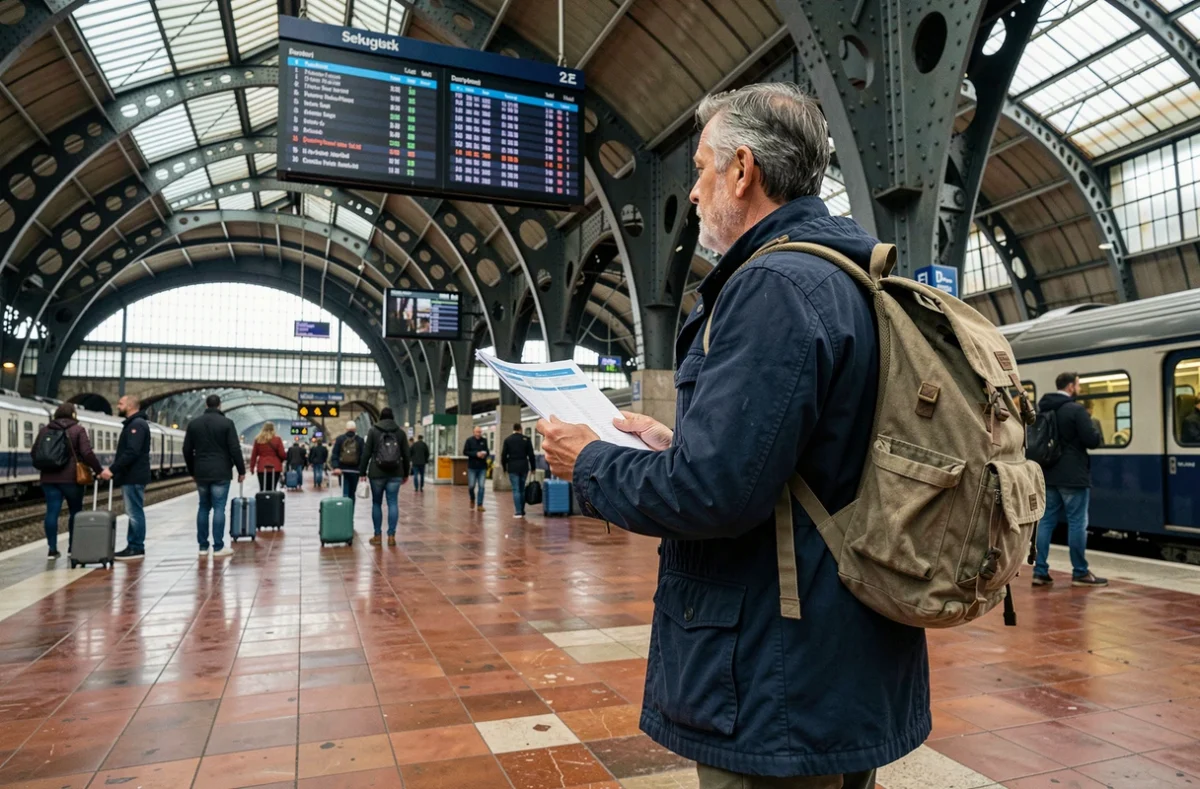
Traveling off-season: budget, comfort, and secondary destinations
The Booking.com Travel & Sustainability 2026 report, published on September 15, 2026, indicates that travelers increasingly want to avoid overcrowded destinations and prefer off-peak periods. This is no longer just a money-saving tip; it is a structural trend.
Traveling off-season does not mean sacrificing the quality of a stay. It means accepting a shift: visiting the south of France in October instead of August, discovering a secondary city rather than a saturated tourist capital.
What off-season travel concretely changes
- Transport costs decrease significantly, whether for a flight, a van road trip, or a train journey, as demand is lower
- Accommodations (camping, rentals, hotels) offer reduced rates and broader availability, allowing for adjustments to the itinerary along the way
- Tourist sites operate without caps or waiting lines, freeing up time for unexpected activities or a slower stay
Off-season travel is particularly suited for travelers who prioritize local adventure and discovering countries or regions at a less constrained pace.
Regenerative tourism: contributing rather than consuming
The concept of sustainable travel has evolved. Approaches known as regenerative tourism no longer just focus on reducing waste or offsetting emissions. They aim to directly fund local projects: restoring ecosystems, supporting craftsmanship, participating in community projects.
For the traveler, this translates into concrete choices when organizing a stay. Selecting accommodation managed by a local cooperative, participating in a trail restoration program, or buying supplies from local producers are decisions that change the nature of the trip.
How to integrate this logic into preparation
The challenge is not finding local initiatives. It is identifying them before departure and integrating them into the itinerary without complicating the planning. A few reflexes help:
- Look for recognized sustainable tourism labels or certifications in the destination country, rather than marketing self-declarations
- Favor short supply chains for meals and activities by directly contacting local providers
- Allocate a budget line for local contributions (donations, project participation), even if modest
This approach requires a bit more preparation time, but it transforms a passive stay into an experience rooted in a territory.

Building a flexible itinerary without random improvisation
Many travel tips pit rigid planning against total improvisation. Neither works well in practice. A flexible itinerary relies on fixed points and open slots.
The fixed points are non-refundable reservations: flight, overnight train, high-season accommodation, access slot to a limited site. The open slots are days without obligations, where the weather, a meeting, or a desire can guide the program.
Balancing both in practice
For a week-long stay, setting three anchor points (arrival, central stop, departure) and leaving the rest open works in most cases. For a road trip or van journey over several weeks, the ratio can drop to one fixed point every four or five days.
Travel insurance should be calibrated according to this flexibility. A policy covering partial cancellations or itinerary changes offers better protection than a standard insurance designed for a packaged stay. Checking the cancellation clauses before subscribing avoids unpleasant surprises in case of a change of plans.
Preparing your suitcase accordingly follows the same principle: a light and versatile bag facilitates changes in itinerary. Packing less keeps the freedom to pivot without logistical constraints.
The best travel organization is not the one that plans everything. It is the one that identifies real constraints (access, budget, regulations) and leaves the rest open to what the terrain offers.