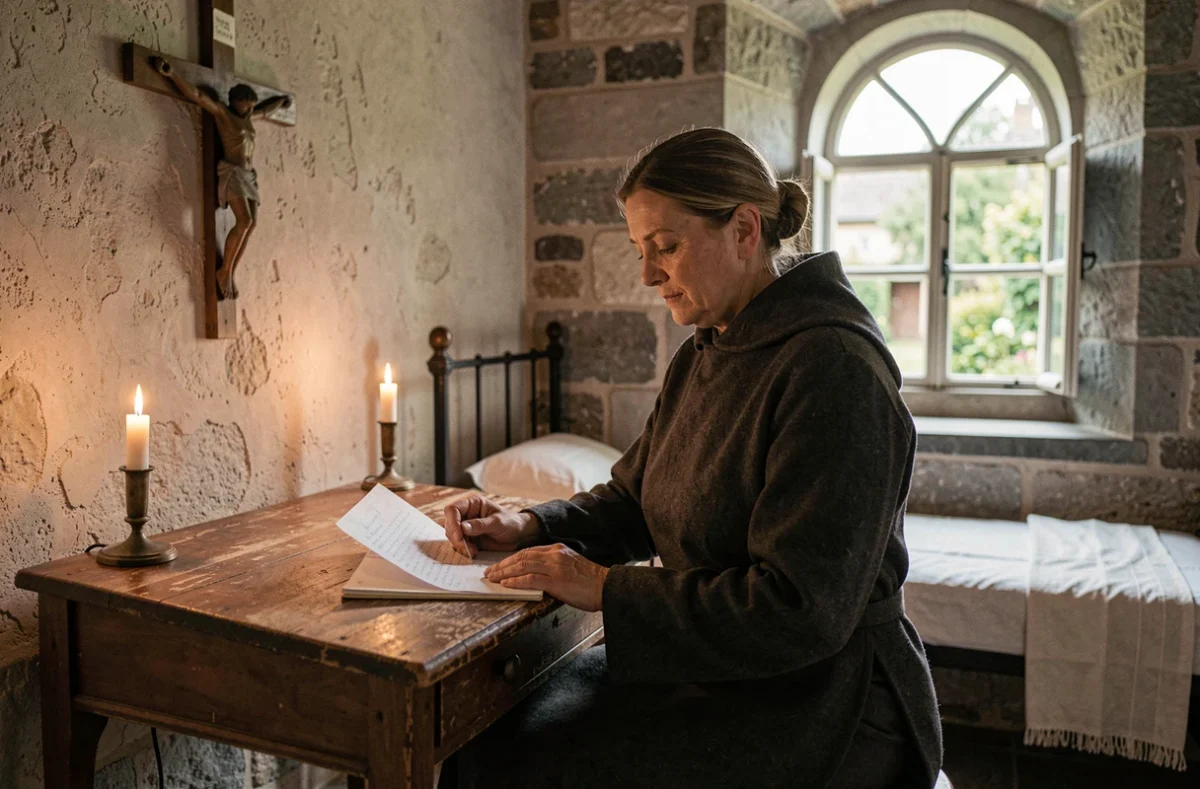
Entering a convent permanently signifies a religious commitment through perpetual vows, following a discernment process that spans several years. This journey does not begin with a formal application, but rather with a series of progressive steps governed by canon law and the specific rules of each community. The total duration, admission conditions, and requirements vary depending on whether it is a contemplative monastery or an apostolic congregation.
Canon Law and Admission Conditions to the Convent
Canon law establishes a general framework that each religious institute adapts in its own regulations. Before any steps are taken, two blocking points deserve special attention: marital status and parental obligations.
A person who has been married civilly or religiously must obtain a canonical annulment of the marriage or a dispensation granted by Rome. Without this step, no community can accept the application. If minor children still depend on the candidate, entry into the community remains impossible until this responsibility is resolved.
These constraints are rarely detailed in spiritual retreat guides, which focus on the temporary aspect of the stay. For those considering withdrawing permanently into a convent, verifying these canonical prerequisites is the very first concrete step, even before contacting a community.
The age of entry is not strictly capped, but most communities prefer candidates in their twenties to forties. Beyond that, acceptance depends on the candidate’s health and the community’s ability to support them in the long term.
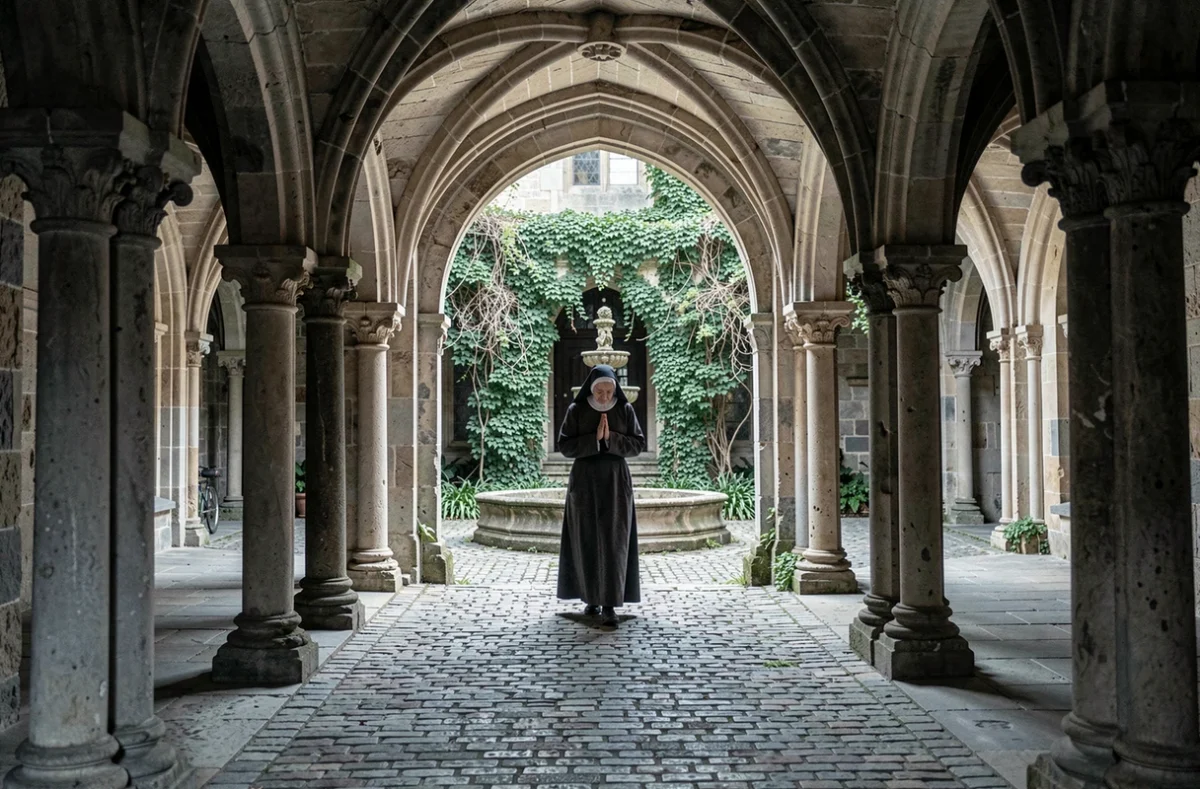
Steps of the Discernment Process: From Pre-Postulancy to Perpetual Vows
The path to permanent commitment follows a marked progression. Each phase has a specific objective and can be interrupted, either by the candidate or by the community.
Pre-Postulancy and Initial Stays
Before any formal integration, the candidate makes regular visits to the community. These visits allow them to discover the rhythm of monastic life (offices, work, silence) and to establish a connection with the novice master or mistress. This phase, sometimes called pre-postulancy, lasts from a few months to over a year depending on the institutes.
Postulancy and Canonical Novitiate
The postulancy marks the official entry into the community, without taking vows. Its duration varies: for example, the Little Sisters of Saint Francis of Assisi provide for a postulancy of nine to twelve months. Next comes the canonical novitiate, an intensive training period that generally lasts two years. The novice wears the religious habit, follows a program of spiritual and theological formation, and fully participates in community life.
Temporary Vows and Then Perpetual Commitment
After the novitiate, the candidate makes temporary vows that are renewed over several years. The Abbey of Solesmes describes a path where the definitive commitment occurs after at least six years from entry. The Little Sisters of Saint Francis of Assisi also foresee several years of temporary vows before the perpetual profession.
This gradual process protects both the candidate and the community. At each stage, discernment can lead to a departure without stigma.
Contemplative Monastery or Apostolic Congregation: Two Distinct Realities
Not all religious communities operate in the same way, and the choice between contemplative life and apostolic life radically determines daily life.
- Contemplative monasteries (Benedictines, Cistercians, Carmelites) organize the day around liturgical prayer, silence, and manual work. Enclosure limits outings and contacts with the outside world. The rhythm is stable, repetitive, anchored in a unique place.
- Apostolic congregations (Dominicans, Franciscans, Salesians) combine communal prayer with external missions: teaching, care, social action. Members may be sent to different houses, in France or abroad.
- Some new communities, founded in recent decades, offer hybrid forms that blend contemplation and apostolate. Their own regulations are sometimes less codified, making discernment more delicate.
The candidate must precisely identify the form of life that corresponds to their calling before committing. A prolonged stay in a contemplative community does not prepare one for life in an apostolic congregation, and vice versa.
Anticipating the Question of Social Rights and Assets Before Entry
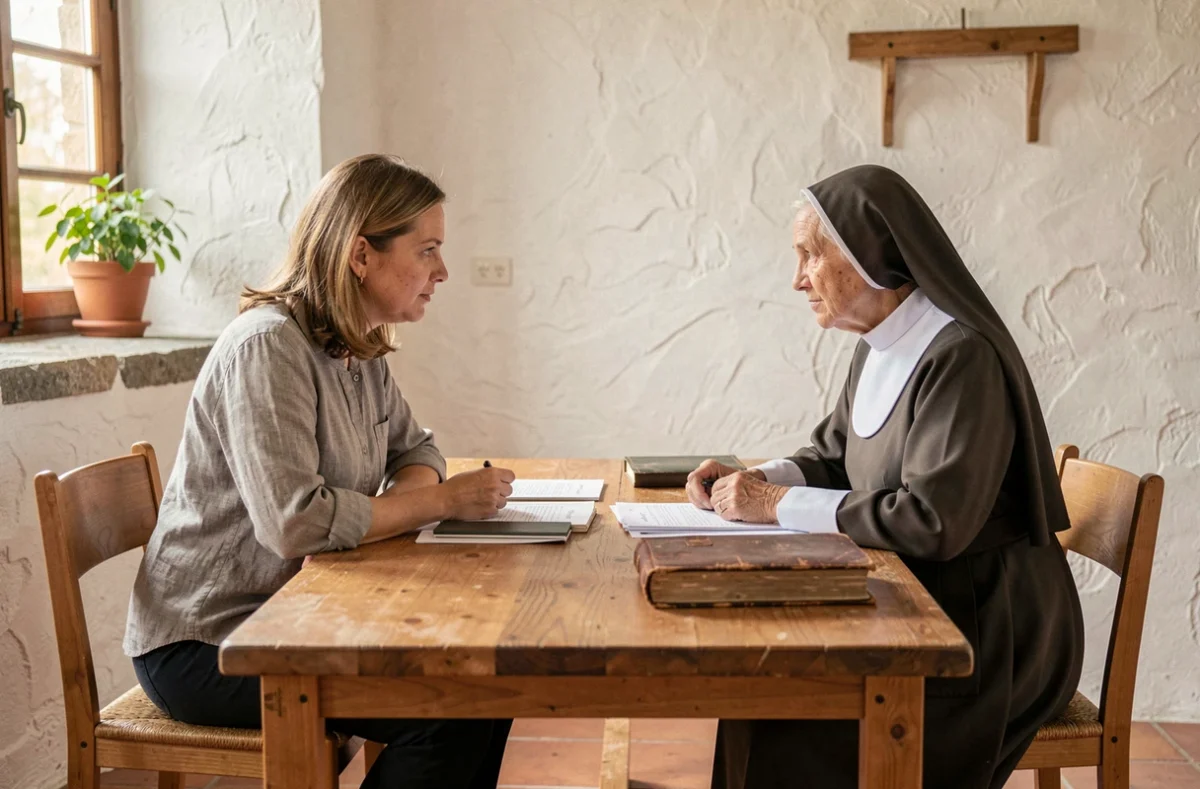
One aspect rarely addressed in spiritual guides concerns the material situation of the future religious. The vow of poverty, pronounced at the time of commitment, implies renouncing personal management of one’s assets. In practice, the candidate’s income and assets are entrusted to the community or reorganized according to the institute’s own law.
Canon 702 §2 imposes on the institute an obligation of equity and evangelical charity towards a member who would leave the community. In practice, a person who has lived under the vow of poverty for years may find themselves without a personal bank account, without independent income, and without immediately available housing.
Before entry, it is therefore wise to:
- Clarify the situation of their assets (real estate, savings, potential debts) with a notary or legal advisor.
- Check their rights to social security and retirement, as the years spent in community do not always generate standard contributions.
- Maintain a minimal administrative link (updated ID card, correspondence address) to facilitate any potential reintegration.
This material preparation is not a lack of faith. It is a personal responsibility that serious communities explicitly encourage during discernment.
The path to definitive religious life remains one of the most structured commitments that exist. Each phase offers a space for reflection and freedom, including the freedom to withdraw. The strength of this commitment lies precisely in the time it requires.