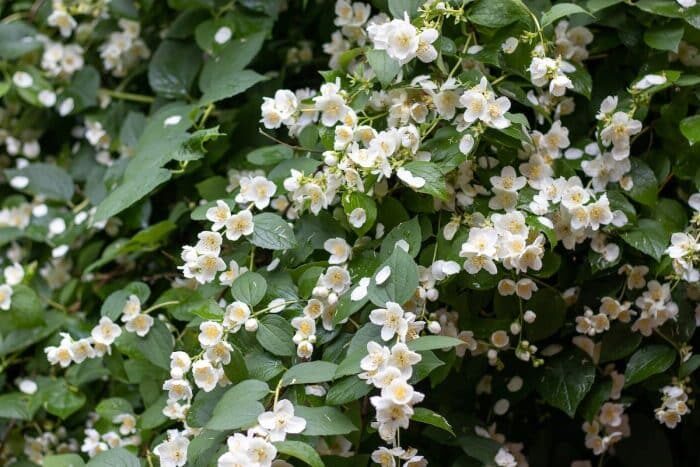
The mock orange, also known as “jasmine of poets,” is an ornamental plant highly valued for its fragrant white flowers that bloom at the dawn of spring. To ensure abundant flowering and healthy growth, proper and timely pruning is essential. Whether you are a budding gardener or an expert looking to refine your skills, you may be wondering how to carry out this operation correctly. This practical guide will provide you with valuable tips and effective tricks for pruning your mock orange, optimizing its flowering, and beautifying your garden.
The origins of the mock orange: a plant with many stories
The world of mock oranges is vast and varied, offering an impressive range of botanical beauties that enchant with their generous flowering and captivating scents. Among the most appreciated is the Philadelphus coronarius, renowned for its immaculate flowers in spring and its deciduous foliage of deep green.
Another popular species is the Philadelphus ‘Belle Étoile’, identifiable by its semi-double flowers displaying a distinctive yellow-green center. This variety has the advantage of a longer flowering period than other species.
For those with limited space in their garden or who prefer compact shrubs, the solution might be the Philadelphus microphyllus. This is a dwarf mock orange perfectly suited for small urban gardens or as a border plant.
On the other hand, if you aspire to exceptional floral abundance, the species Philadelphus x virginalis ‘Minnesota Snowflake’ will be ideal with its lush summer flowering.
Now that we have examined some of the main types of mock oranges available in the horticultural market, let’s get to the heart of the matter: mock orange pruning. This is a crucial step not only to master the appearance of this beautiful shrub but also to ensure its vigor and overall health.
It is important to note that each type requires a specific approach to mock orange pruning. For example, when it comes to Philadelphus coronarius (common mock orange), it should be pruned just after flowering so that it can generate enough new buds throughout the current year until its next flowering season.
On the other hand, if you have a ‘Belle Étoile’ specimen, it may be helpful to perform a slightly more severe pruning after its first year to temper its naturally bushy growth and thus promote a harmonious distribution of the upcoming flowers.
The types of mock oranges: a varied choice for all gardens
To achieve a spectacular flowering of your mock orange, you need to create optimal conditions for its growth. Here are some key elements to consider:
Sun exposure: The mock orange is a plant that requires sunny exposure to thrive fully. It needs at least six hours of direct sunlight per day. Therefore, choose a location in your garden where it will receive maximum light.
The soil: The mock orange prefers a well-drained and fertile soil. Ensure that the soil in which you plant your shrub is well-prepared, with a good mix of organic compost and potting soil. Avoid overly heavy or clayey soils, which retain water and can lead to root problems.
Watering: Although the mock orange is relatively drought-tolerant once established, it needs regular watering during its active growth period (spring-summer). However, be careful not to overwater as this can lead to fungal diseases or root problems.
Pruning: Regular pruning of the mock orange not only enhances its aesthetic appearance but also its overall health and ability to produce more beautiful flowers each year. In general, prune after the spring flowering by removing dead or damaged branches as well as those that become too invasive.
Fertilization: To stimulate flowering, you can apply a balanced fertilizer to the mock orange in spring and autumn. Choose a fertilizer specifically formulated for flowering shrubs and carefully follow the instructions on the package.
By meeting these ideal conditions, you will give your mock orange every chance to thrive and dazzle your garden with its magnificent fragrant flowers. Also, don’t hesitate to regularly observe your shrub to detect any signs of disease or harmful insects, and act quickly if necessary to preserve its health.
The mock orange is a wonderful plant that deserves all our attention to ensure its optimal flowering. By providing it with sunny exposure, well-drained soil, moderate but regular watering, as well as appropriate pruning and fertilization, you will be rewarded with the radiant beauty of this iconic shrub of the French landscape garden.
The ideal conditions for the flowering of the mock orange: secrets of a radiant beauty
When it comes time to prune your mock orange, there are a few simple rules to follow to ensure effective and beneficial pruning for the plant. Here are some tips on when and how to prune a mock orange:
It is important to know that the best time to carry out the pruning of the mock orange is just after its spring flowering. This is when the flowers have faded and the shrub enters a phase of relative dormancy. Pruning at this time will allow the new shoots to develop unhindered.
To start, equip yourself with a sharp pair of pruning shears and disinfect them with an antiseptic product before each cut. This prevents the spread of diseases between the cut branches.
Identify the dead or damaged branches as well as those that are too invasive or that create a visual imbalance in the shrub. Remove them by cutting them flush with the main trunk or a vigorous lateral branch.
If some branches only have yellowed or slightly damaged leaves, you can opt for a more moderate pruning by only removing part of the affected leaves while preserving the rest of the branch. This approach will also help maintain the structural integrity of the bush.
It is also possible to use this opportunity to thin out the interior of the mock orange to promote better air circulation and light penetration. To do this, remove branches that cross or rub against each other.
After finishing the pruning, consider applying a healing paste to significant cuts to help prevent infections and promote faster healing.
It should be noted that the mock orange can also benefit from light pruning throughout the year to maintain its shape and overall appearance. It is best to avoid any drastic pruning outside of the post-flowering period to not compromise its ability to produce abundant flowers the following year.
Pruning a mock orange requires a bit of attention and some precise gestures. By following these simple yet essential tips regarding the appropriate timing and techniques, you will allow your mock orange to fully flourish, offering magnificent flowering year after year. So take the necessary time to care for your shrub and enjoy the enchanting display it offers in your garden.
Pruning a mock orange: tips to avoid mistakes
Now that you have discovered the secrets of an effective mock orange pruning, it’s time to move on to tips for a beautiful flowering. Indeed, the health and vigor of your shrub will have a direct impact on its ability to produce abundant and vibrant flowers.
Make sure to provide your mock orange with an appropriate location. It prefers sunny or slightly shaded spots, with well-drained and fertile soil. Also, ensure it has enough space to grow without being suffocated by other plantings.
Watering plays a crucial role in the proper development of the mock orange. Ensure the soil remains slightly moist but avoid excess that could promote the development of fungal diseases. Regular but moderate watering is therefore recommended.
The nutrient supply is also important to stimulate the flowering of the mock orange. Annual fertilization in spring with a balanced fertilizer specific to woody plants will promote healthy and vigorous growth as well as a profusion of flowers.
Don’t hesitate to carry out a gentle pruning throughout the year to maintain balance among the branches and encourage the formation of new floral buds. Simply remove the small unwanted or disorderly shoots that may weaken the overall aesthetics of your shrub.
Another tip is to protect your mock orange from common pests and diseases. Aphids, for example, can weaken the shrub and degrade flowering. Use natural methods to keep them away, such as using a strong water jet or introducing organic insecticides.
Take the time to regularly observe your mock orange to detect any early signs of problems or deficiencies. Good maintenance involves attentive monitoring to intervene quickly if needed.
By following these simple yet effective tips, you will be able to optimize the flowering of your mock orange and fully enjoy its enchanting charm in your garden. Feel free to experiment with different approaches according to the specifics of your environment and share your knowledge with other plant enthusiasts.
The mock orange is undoubtedly a beautiful plant that deserves all our attention and care. So take pleasure in nurturing it, as it will vibrate your garden with its spring splendor year after year.
Tips for a beautiful flowering of the mock orange: the little secrets of gardeners
After discovering the secrets of an effective mock orange pruning, it’s time to look into the other necessary care to ensure a spectacular flowering. Indeed, the health and vigor of your shrub will have a direct impact on its ability to produce abundant and vibrant flowers.
Make sure to choose an appropriate location for your mock orange. Favor sunny or slightly shaded spots, with a well-drained and fertile soil. Also, avoid planting it too close to other plants so that it can fully benefit from the space it needs to develop harmoniously.
Pay particular attention to the watering of your mock orange. Keep the soil slightly moist without falling into excess that would favor the development of fungal diseases. Regular but moderate watering will thus allow your shrub to thrive in optimal conditions.
To promote the flowering of the mock orange, do not hesitate to provide essential nutrients in the form of fertilizer specially designed for woody plants. Annual fertilization in spring will stimulate its growth and encourage a profusion of beautiful flowers.
In addition to nutritional care, also carry out a gentle pruning throughout the year to balance the structure of the mock orange and encourage the formation of promising new floral buds. Simply remove unwanted or disorderly shoots to preserve the overall aesthetics of your shrub.
In addition to the previously mentioned care, it is essential to take preventive measures against common pests and diseases that can affect the mock orange. Aphids, for example, are known to weaken the shrub and deteriorate flowering. Use natural methods such as a powerful water jet or the introduction of organic insecticides to keep these pests away.
Don’t forget to regularly monitor your mock orange to spot any early signs of problems or deficiencies. Careful maintenance involves constant observation to be able to intervene effectively when needed.
By following these simple yet effective tips, you will be able to optimize the flowering of your mock orange and fully enjoy its enchanting beauty in your garden. Feel free to adapt these recommendations according to the specificities of your environment and share your knowledge with other plant enthusiasts.
The mock orange deserves all our attention and care as it will undoubtedly bring a magical touch to your outdoor space with its unparalleled spring splendor year after year.
Caring for the mock orange: simple gestures for a thriving plant
After discovering the secrets of an effective mock orange pruning, it’s time to look into the other necessary care to ensure a spectacular flowering. The choice of location is crucial to ensure the health and vigor of your shrub. Opt for a sunny or slightly shaded spot, with a well-drained and fertile soil.
Watering also plays an important role in the optimal development of the mock orange. It is necessary to keep the soil slightly moist, without exceeding to avoid problems related to excess water, such as fungal diseases. Regular but moderate watering will allow your shrub to thrive fully.
In terms of nutrition, do not hesitate to provide essential nutrients to the mock orange in the form of fertilizer specially designed for woody plants. Annual fertilization in spring will stimulate its growth and encourage a profusion of vibrant flowers.
In addition to nutritional care, also practice gentle pruning throughout the year to balance the structure of the mock orange and encourage the formation of promising new floral buds. Simply eliminate unwanted or disorderly shoots to preserve its overall aesthetic appearance.
Beyond the fundamental aspects, it is essential to be vigilant against pests and diseases that can affect the mock orange. Aphids are particularly known to weaken the shrub and harm its flowering. Favor natural methods, such as a powerful water jet or the use of organic insecticides to keep these pests away.
Keep a close eye on your mock orange to quickly detect any early signs of problems or deficiencies. Regular maintenance involves constant observation to be able to intervene effectively when needed.
By following these simple yet essential tips, you will be able to optimize the flowering of the mock orange and fully enjoy its enchanting beauty in your garden. Feel free to adapt these recommendations based on the specificities of your environment and share your knowledge with other plant enthusiasts.
The mock orange deserves all our attention and care as it will undoubtedly bring a magical touch to your outdoor space with its unparalleled spring splendor year after year. Take the necessary time to care for this majestic shrub, and you will be rewarded with its timeless charm that will illuminate your garden.