
In 2023, about 0.8% of the French population had reached the age of 90. This ratio, modest in appearance, hides an unprecedented demographic acceleration: the number of nonagenarians has quadrupled since 1990.
Grand Age Law 2025 and APA in EHPAD: a game-changing framework for nonagenarians
The Grand Age law adopted in 2025 introduced a single national rate for APA in EHPAD. This measure aims to reduce disparities in care coverage between departments, a recurring issue for residents over 90 whose loss of autonomy requires substantial support.
For families, the direct consequence is better financial clarity. Before this harmonization, out-of-pocket expenses could vary significantly from one region to another, making access to care unequal depending on the place of residence. To better understand the percentage of people over 90 in France, it is also necessary to look at the public policies that support this age group.
At the same time, the mobile geriatrics units deployed since 2025 have contributed to a marked decrease in acute hospitalizations among nonagenarians, according to Irdes. Fewer hospitalizations mean fewer decompensations, one of the main factors of death in this age group.

Demographics of those aged 90 and over in France: what the Insee data says
The Insee figures outline a clear curve. The share of people aged 65 and over reaches about 21% of the population, or nearly 13.9 million inhabitants. Among them, nonagenarians represent a still minor but rapidly growing fraction.
In 1990, the proportion of people aged 65 and over did not exceed 14%. Projections for 2050 estimate it will reach 27%. Aging affects all upper age groups, but it is beyond 90 years that the increase is most spectacular in relative terms.
Women and men facing longevity
Women make up the vast majority of nonagenarians. The gap in life expectancy between the sexes, although slowly narrowing, remains sufficient to create a marked imbalance in the highest age groups. This feminization of old age impacts support policies, as very old women often live alone.
Men are gradually catching up, driven by a decrease in certain risk factors (smoking, workplace accidents). The convergence remains slow, but it alters the composition of nonagenarian cohorts decade after decade.
Centenarians and supercentenarians: the visible peak of French longevity
Beyond 90 years, another boundary is shifting. According to Ined, the number of supercentenarians (105 years and older) has doubled in France between 2020 and the latest estimates. This progression is linked to improvements in palliative care and better nutrition tailored to old age.
The increase in centenarians is not just a demographic curiosity. It indicates that gains in longevity are no longer concentrated solely around the age of 80, but are spreading to ages previously considered exceptional.
- Higher quality palliative care allows for less traumatic end-of-life support, reducing acute complications.
- Specialized geriatric nutrition (protein enrichment, prevention of malnutrition) helps maintain muscle mass and autonomy.
- Coordinated medical follow-up, particularly through mobile geriatrics units, limits disruptions in care pathways.
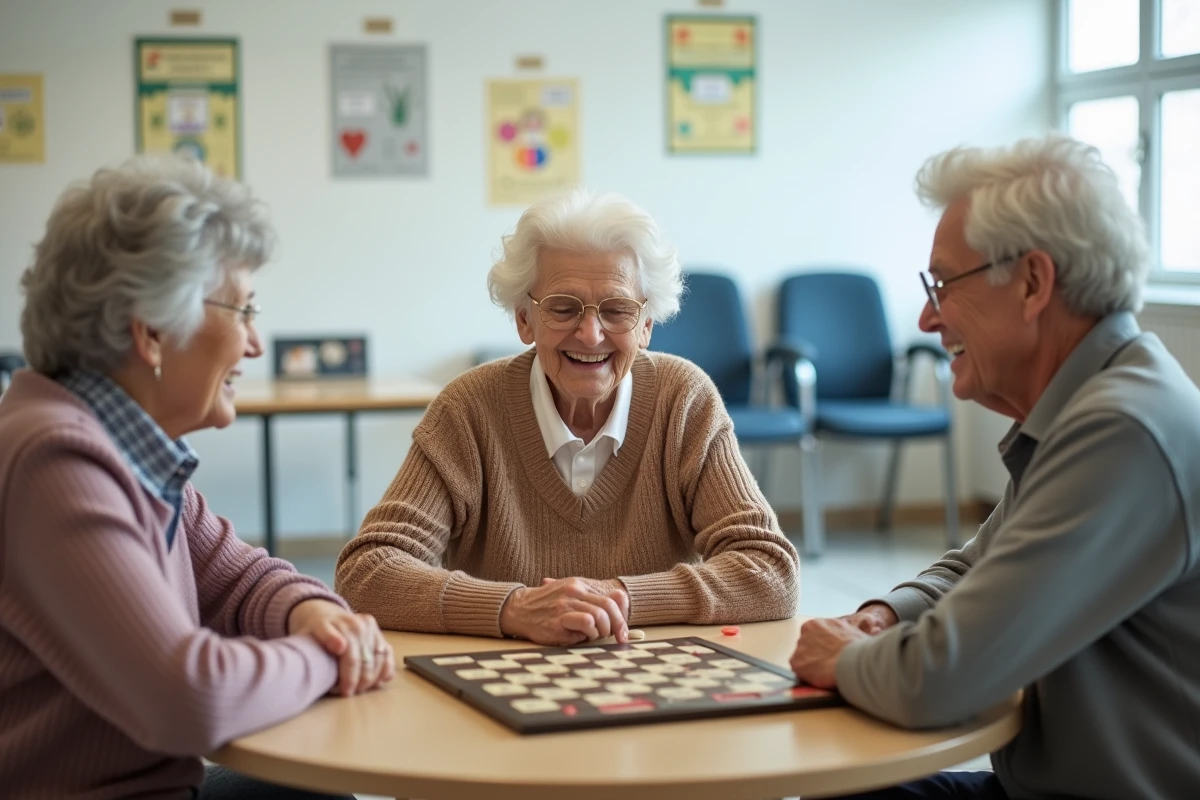
Artificial intelligence and detection of cognitive frailties: a lever for the autonomy of nonagenarians
Classic demographic analyses measure longevity, not the associated quality of life. One area still little explored concerns the role of artificial intelligence in the early detection of cognitive frailties in older adults.
Automated screening tools, capable of analyzing voice, gait, or micro-behavioral variations, are being experimentally deployed in several European countries. The goal is to identify early signs of cognitive decline several years before the classic clinical diagnosis.
Why early detection changes projections
Identifying cognitive frailty at a reversible stage allows for intervention through stimulation, habitat adaptation, or pharmacological adjustment. These early interventions could significantly increase the proportion of autonomous nonagenarians by 2035.
The demographic projections from Insee or Ined rarely incorporate this type of technological variable. They extend past trends without modeling the potential impact of tools that did not exist five years ago. The gap between projected curves and future reality could be notable if these technologies scale up.
- AI voice analysis detects markers of cognitive decline with greater sensitivity than standard paper tests.
- Home motion sensors identify changes in gait, an early indicator of frailty.
- Predictive algorithms cross medical and behavioral data to target at-risk individuals before any visible loss of autonomy.
The share of French people reaching 90 will continue to increase in the coming decades. The question is no longer just how many will cross this threshold, but under what conditions. The regulatory advances such as the Grand Age law and technological innovations in cognitive detection are gradually redefining the boundary between endured longevity and managed aging.