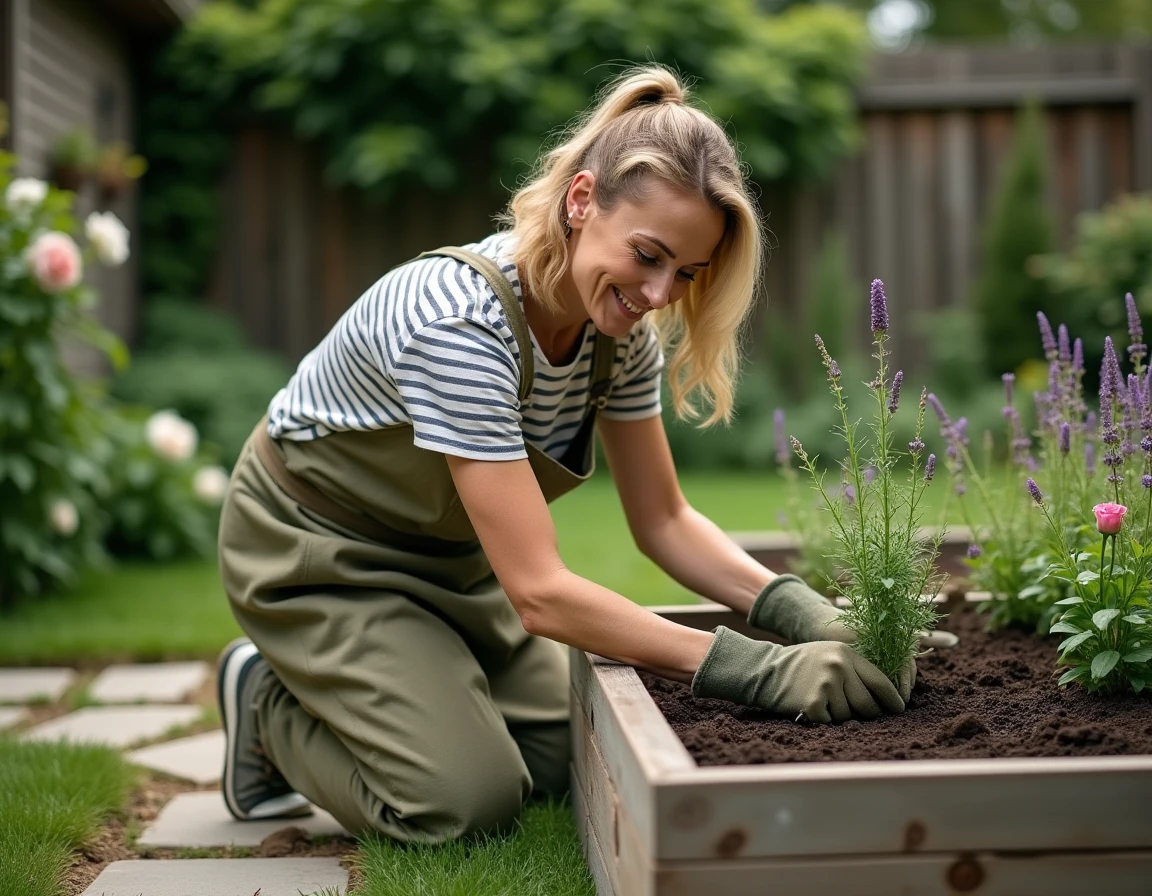
A garden that remains pleasant in January as well as in July does not rely on a standard maintenance calendar applied mechanically. It is based on design choices made in advance, often even before the first planting. In recent years, watering restrictions related to drought orders in several French departments have accelerated a shift in logic: to design a water-efficient garden from the start rather than compensating later with intensive maintenance.
Soil diagnosis before planting: what a pH and microbial life analysis reveals

The starting point of a sustainable garden is the soil itself. Since 2022, several garden center brands have been offering soil testing services, either as kits or direct analysis in-store, to measure pH, organic matter content, and compaction.
This data changes everything. An acidic soil with a low pH will never properly support lavenders or irises without prior correction. Compacted soil prevents deep rooting, making plants more vulnerable to summer droughts.
Before purchasing any plants, analyzing a soil sample helps guide the choice of vegetation and limit chemical inputs. Restoring soil life through compost and stopping deep plowing is a recognized lever for achieving a resilient garden throughout the four seasons.
On sites like Tout pour le Jardin, you can find resources to identify the appropriate materials for these preparatory steps, from soil testing kits to organic amendments.
Water-efficient plant palette: perennials and alternatives to traditional lawns
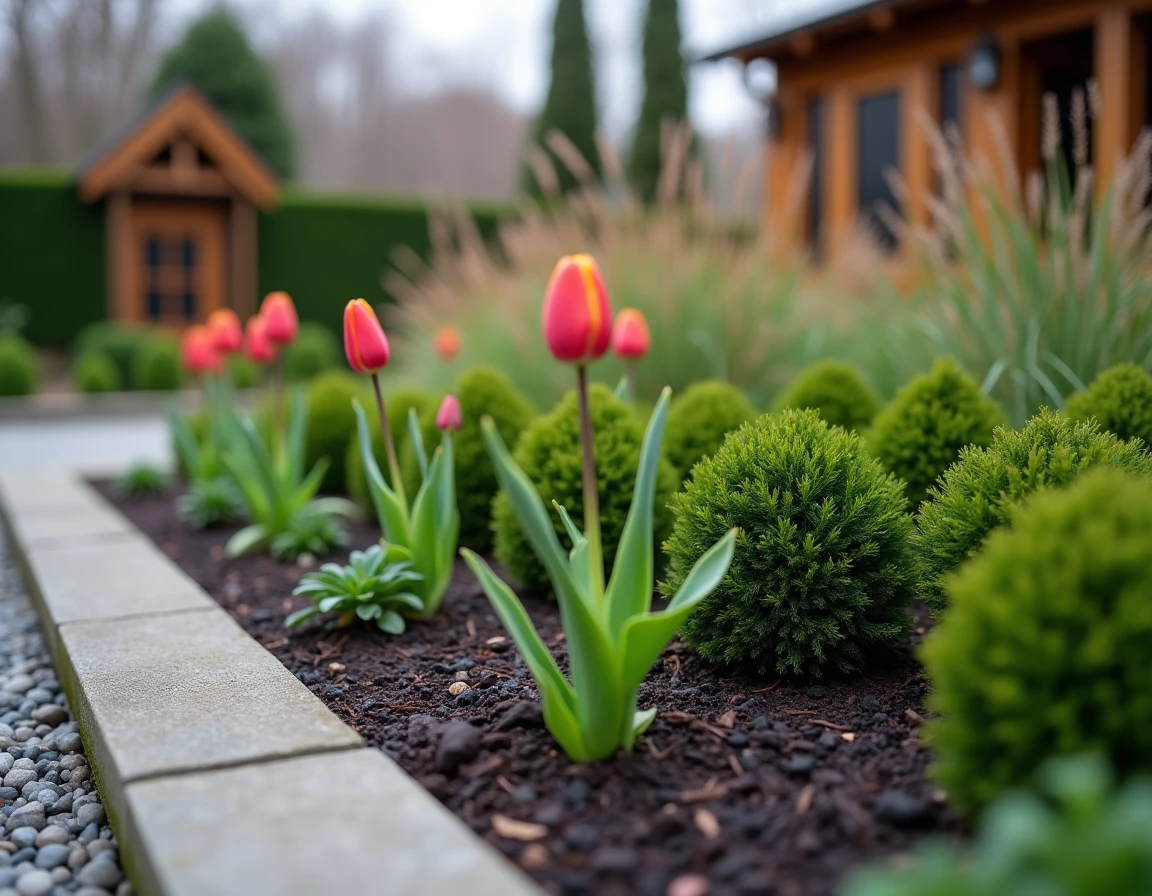
Recurring drought orders since 2023 have made a long-theoretical constraint concrete: garden watering is no longer a guaranteed resource in summer. Several departments now impose total watering bans during certain periods, making traditional lawns and water-demanding flower beds difficult to maintain.
The most effective response is to choose perennial plants suited to the local climate. Xerophytes (plants with low water needs) are not limited to cacti: sedums, yarrow, stipas, gaura, and euphorbias offer blooms spread over several months while withstanding prolonged dry periods.
To replace traditional grass, alternative lawns are emerging. Dwarf clover, creeping thyme, or dichondra form green covers that tolerate drought, require little mowing, and improve soil structure.
- Group plants by water needs (dry areas, semi-shaded areas, irrigated areas) to limit water waste
- Favor local or Mediterranean perennials that establish themselves sustainably without annual replanting
- Install a rainwater harvesting system connected to a drip irrigation for areas that require regular watering
This zoning by water needs, sometimes called hydrozoning, allows for significantly reducing the garden’s water consumption without sacrificing plant diversity.
Maintenance of living soil: mulching, composting, and no-till
Maintaining a garden year-round is not just about what happens above ground. The quality of the soil determines the long-term health of the plants, their resistance to frost as well as heatwaves.
Organic mulching (wood chips, fallen leaves, straw) serves three simultaneous functions: it limits evaporation, slows the growth of weeds, and gradually nourishes the soil as it decomposes. A layer of mulch maintained year-round reduces watering and weeding.
Homemade compost complements this system. Since the widespread adoption of organic waste sorting in France, more and more households have composters. Mature compost, incorporated on the surface without deep turning, stimulates the microbial life of the soil, improving its structure and water retention capacity.
Deep plowing may seem beneficial for loosening the soil. The results on this point depend on the type of soil and its degree of compaction, but the basic principle holds: preserve mycorrhizal networks and soil fauna (earthworms, springtails) rather than destroying them through systematic digging.
Integrated pest management: end of chemical solutions in the garden
Since the ban on most synthetic plant protection products for individuals in France, integrated pest management has become the de facto standard, even if its practical application remains uneven.
The principle relies on combining several levers rather than a single treatment:
- Encourage natural auxiliaries (ladybugs, lacewings, hedgehogs) by installing diverse hedges and insect shelters
- Practice crop rotation in the vegetable garden to break pest cycles
- Use plant-based infusions (nettle, horsetail) as preventive treatments rather than curative ones
- Accept a reasonable tolerance threshold for pests, as a garden without any insects is an unbalanced garden
A garden treated only preventively withstands better than a garden treated in an emergency. This logic requires a change in perspective: observe before acting, identify the pest before seeking a solution.
Plant diversity within the garden remains the factor most often correlated with better natural regulation of pest populations.
A garden designed to last throughout the year starts below the soil surface, with a diagnosis and plant choices adapted to the actual terrain. A few regular actions are then enough to maintain this balance season after season, without seasonal catch-up.