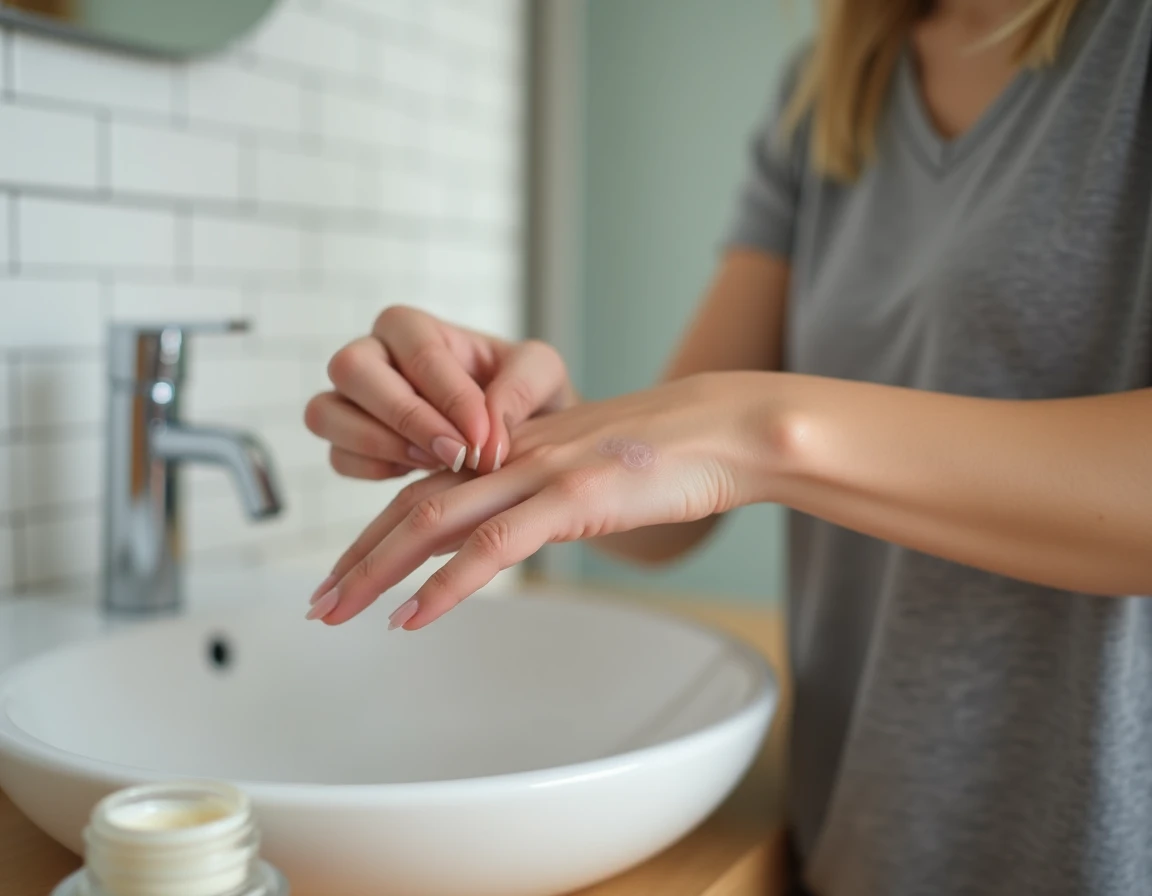
The marks left by a ring on the finger take various forms: green trace, darkening, persistent skin groove. Their origin differs depending on the metal, skin pH, and usage habits. Understanding the chemical mechanism behind each type of mark allows for the selection of the appropriate removal method, rather than applying a generic remedy that solves nothing.
Copper oxidation, nickel corrosion: the mechanism that colors the skin

The majority of colored marks come from the oxidation of alloy metals, not the main metal. 18-carat gold contains a portion of copper or silver depending on its color. 925 silver incorporates copper. It is these secondary metals that react with sweat, sebum, and skin acidity to form pigmented metal salts.
Copper produces a greenish acetate or carbonate when in contact with acidic sweat. Silver, on the other hand, reacts with sulfur compounds present in the air or certain cosmetics, generating black silver sulfide. These reactions accelerate in humid environments or when skin pH is low.
A study published in the Journal of Cosmetic Dermatology in 2023 shows that hand sanitizers worsen the oxidation of copper-based alloys, increasing the amount of pigmented residue deposited on the skin. The alcohol combined with the occlusive agents in these gels creates an environment conducive to accelerated corrosion. Better understanding the severity and origin of marks left by a ring helps calibrate the response, between simple cleaning and changing jewelry.
Comparison of methods to remove ring marks from the skin

Not all techniques are equal. Their effectiveness depends on the type of mark (green, black, mechanical groove) and skin sensitivity.
| Method | Targeted mark type | Mode of action | Main limitation |
|---|---|---|---|
| Warm soapy water | Recent green or black mark | Dissolution of soluble metal salts | Ineffective on ingrained marks |
| Lemon juice | Green mark (copper) | Citric acid dissolves verdigris | Irritating on damaged or sensitive skin |
| Baking soda paste | Black mark (silver, gold) | Gentle abrasion and alkaline reaction | Not suitable for the face |
| Dimethicone barrier cream | Prevention of all marks | Protective film between skin and metal | Daily application required |
| Warm white vinegar | Rust (jewelry containing iron) | Acetic acid dissolves iron oxide | Odor, and aggressive on precious metals |
Soap remains the first reflex. For a stubborn green mark, applying lemon for a few minutes and then rinsing gives quick results. However, baking soda should be reserved for black marks on less sensitive areas like fingers, never on the face where the skin is thinner.
Barrier creams and protective polish: two preventive strategies to distinguish
Removing an already formed mark does not solve the underlying problem. Two preventive approaches dominate, and they do not offer the same level of protection.
Clear nail polish on the inside of the ring
This old trick involves applying a thin layer of clear polish to the inner face of the ring. The film isolates the metal from the skin and prevents the chemical reaction. The advantage is the almost zero cost.
The limitation is durability. The polish wears off in a few weeks due to friction, and the application needs to be renewed regularly. On a ring worn daily, this represents a cumbersome maintenance task.
Dimethicone barrier creams
Recent clinical guidelines on contact dermatitis from metals recommend using dimethicone-based barrier creams or film-forming polymers. Applied directly to the finger before wearing the ring, they create an invisible film that limits skin reactions and the formation of colored marks.
This approach has an additional advantage: residual marks wash away easily with water and soap, whereas without protection they sometimes require an acidic treatment. For individuals sensitive to nickel or cobalt, these creams provide a functional daily solution.
Metals that do not mark the skin: surgical steel and PVD coatings
Changing cleaning methods is not always enough. When a copper alloy or plated ring consistently leaves marks despite precautions, the problem lies with the material itself.
The REACH regulation, strengthened by successive annexes since 2020, has pushed European manufacturers to reduce the release of nickel and certain copper alloys in jewelry that is in prolonged contact with the skin. In practice, this has favored the rise of two categories of materials:
- Surgical stainless steel (316L) does not rust under normal wearing conditions and does not release pigments onto the skin, eliminating green or black marks.
- PVD coatings (Physical Vapor Deposition) deposit an ultra-resistant layer of titanium or zirconium nitride on the jewelry, creating a durable barrier between the alloy and the skin.
- Pure titanium and platinum are naturally inert but represent a higher budget. They are suitable for very reactive skin that cannot tolerate any common alloy.
Conversely, jewelry made of fine gold plating on a brass base remains the most likely to leave marks, as the gold layer thins over time and exposes the underlying copper.
Skin groove after prolonged removal: a different case
Some marks are not chemical but mechanical. After years of continuous wear, or after removal post-pregnancy related to edema, a groove persists on the finger. The skin, compressed for a long time, retains a visible imprint.
This type of mark does not respond to any cleaner. Repigmentation and skin smoothing occur naturally, but the timeframe varies from a few weeks to several months depending on the duration of wear and skin elasticity. Regularly massaging the area with a moisturizing cream can help accelerate recovery, without a guarantee of immediate results.
The choice of metal, the use of a dimethicone barrier cream, and removing the ring before exposure to water or chemicals remain the three most effective levers to avoid having to treat these marks afterward.