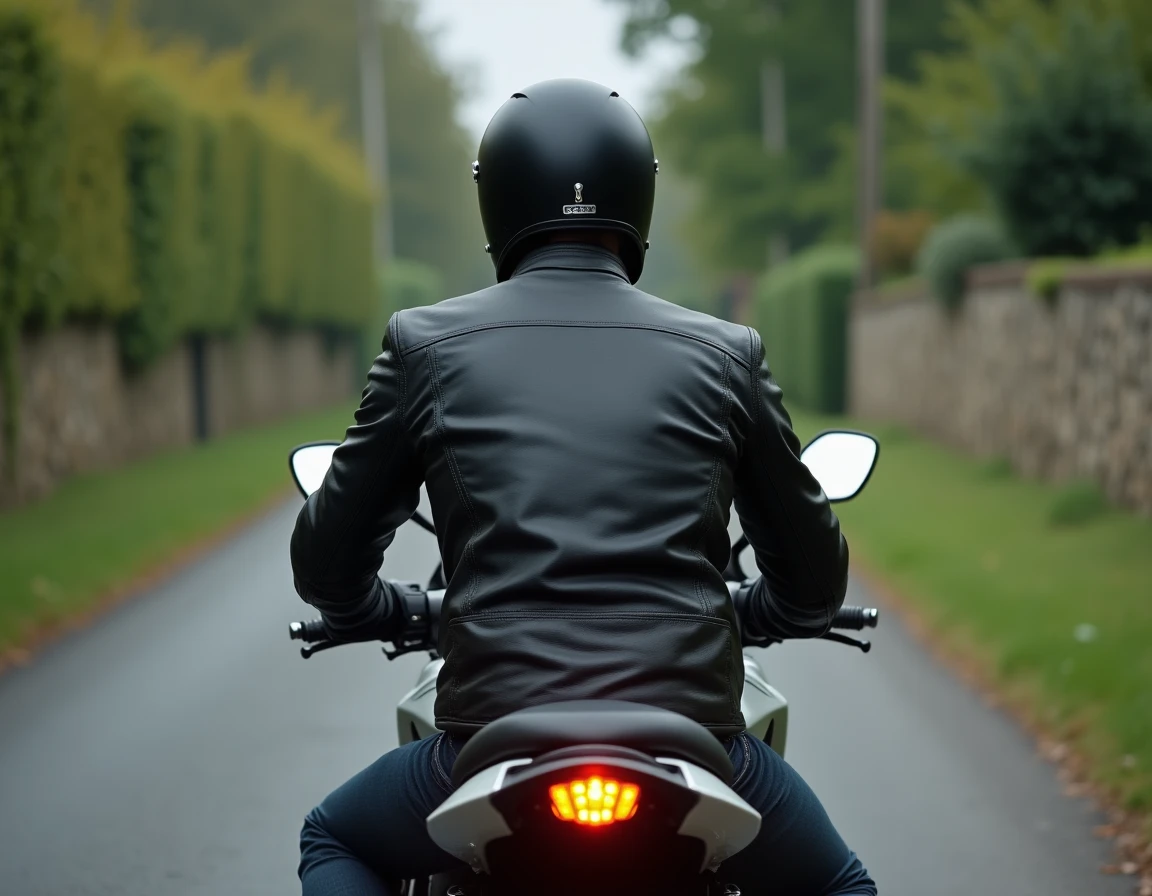
In France, turn signals are part of the mandatory lighting equipment on all motor vehicles, including motorcycles. The highway code and European texts regulate their presence, color, positioning, and operation. With the introduction of motorcycle technical inspections, these requirements take on a new dimension: what sometimes went unnoticed during a simple roadside check becomes a systematic verification point.
Motorcycle Turn Signals and Technical Inspection: What Changes Practically

Before the implementation of technical inspections for two-wheelers, the compliance of turn signals relied almost exclusively on roadside checks by law enforcement. Non-homologated setups, turn signals removed for a clean look, or replaced with fancy models could circulate for years without being questioned.
The motorcycle technical inspection has changed the game. The presence, operation, color, minimum spacing, and symmetry of turn signals are among the explicit inspection points. A non-homologated tuning setup that passed roadside inspection will fail the technical inspection. This particularly concerns imported LED micro-turn signals without CE marking or systems integrated into mirrors without European approval.
To delve deeper into the regulations on mandatory turn signals on motorcycles, one must refer to the European directive 93/92/EEC, transposed into French law, which details the technical requirements applicable to lights and turn signals on two-wheelers.
Brake Lights and Turn Signals: The Confusion to Avoid
A regulatory point often overlooked by motorcyclists customizing their machines is that the rear lights (stop and position) must remain fixed and cannot flash. Some imported red LED setups integrate a flashing function on the stop light, like a warning. This type of configuration is now explicitly punishable.
The doctrine of law enforcement has evolved on this subject. The stop light must emit a fixed red light when braking, without a flashing sequence. Turn signals, on the other hand, emit a flashing orange light. Mixing the two functions in the same optical unit without approval exposes one to a fine and, in some cases, to the immobilization of the vehicle.
Color and Positioning of Turn Signals
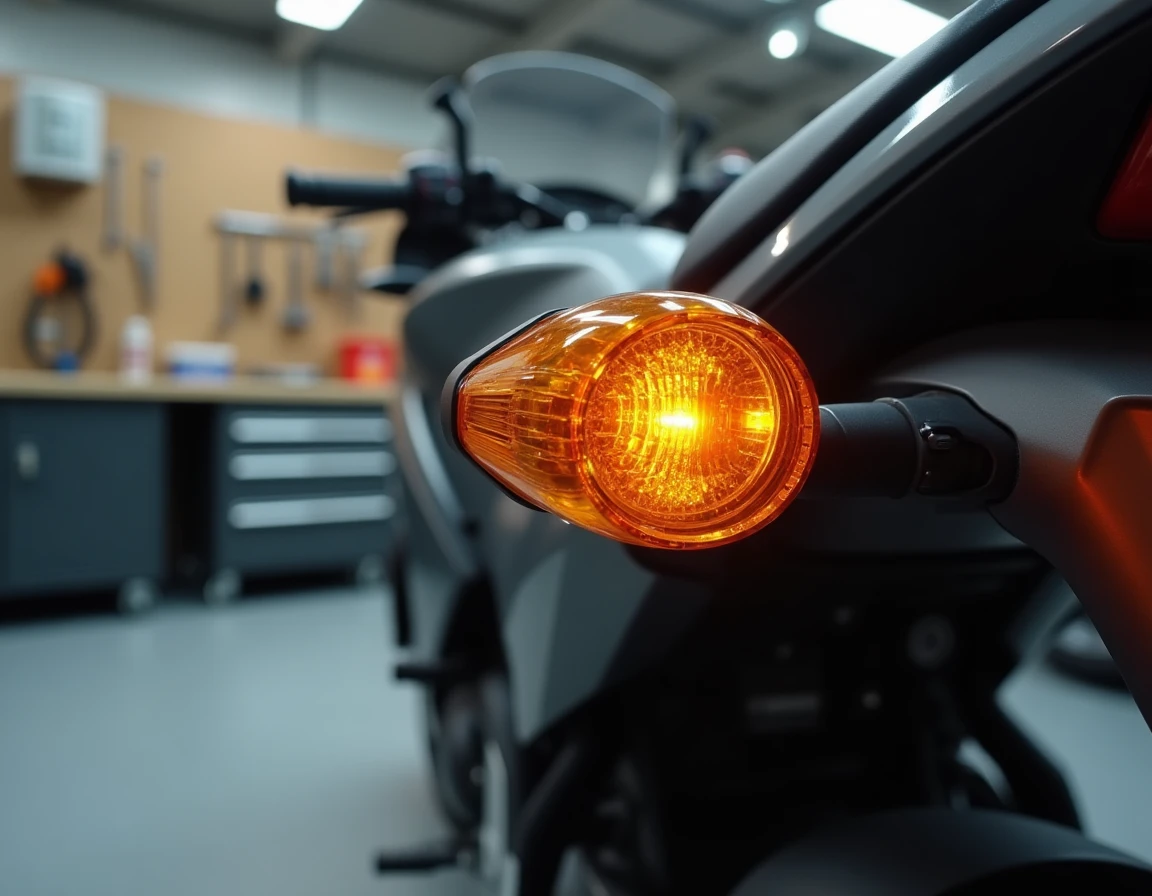
Turn signals must emit a light of orange (or amber) color. Any other color – white, red, blue – renders the device non-compliant. The highway code also imposes symmetry between the left and right indicators, both at the front and rear, with a minimum spacing between the two sides.
Motorcycles must have four turn signals: two at the front and two at the rear. Questions frequently arise in forums about the obligation of rear turn signals. The answer is unequivocal: all four turn signals are mandatory on any motorcycle operating on public roads.
Sanctions and Vehicle Immobilization: Beyond a Simple Fine
The absence of turn signals or their malfunction is not limited to a fixed fine. The increasing frequency of mandatory equipment checks places turn signals at the same level of scrutiny as the license plate, rear reflector, and basic lighting.
During a roadside check, the absence or malfunction of turn signals can lead to the immobilization of the vehicle. This pressure tactic is newer than a simple fine and much more constraining: the motorcycle remains in place until compliance is restored.
- Fine for lighting failure, classified among offenses related to mandatory equipment
- Possible immobilization of the vehicle if the turn signals are absent or non-functional
- Refusal of validation at the technical inspection in case of non-compliance (color, positioning, operation)
Impact on Insurance in Case of an Accident
Insurers and driving schools now emphasize the systematic use of turn signals as a criterion of responsibility. The failure to signal a change of direction is frequently cited to reduce compensation in the event of an accident. A motorcyclist who changes lanes without activating their turn signals, or whose turn signals are out of service, exposes themselves to an unfavorable sharing of responsibility.
This point goes beyond the simple issue of equipment. Even with perfectly functioning turn signals, failing to use them constitutes a driving fault that can be invoked by the opposing party or by the insurer.
Classic Motorcycles and Turn Signals: The Case of Vintage Vehicles
The question often arises for vintage motorcycles. A motorcycle from the 1960s or early 1970s was not necessarily equipped with turn signals when it left the factory. Discussions among enthusiasts revolve around the possibility of riding without turn signals on a classic vehicle.
French regulations impose turn signals on motorcycles put into circulation after a certain date, linked to the transposition of European directives. For earlier models, manual signals (outstretched arm) can replace turn signals if the vehicle was not originally equipped with them. Field reports vary on this point: some inspectors accept this tolerance, while others require the installation of turn signals even on an old vehicle.
- Classic motorcycles without original turn signals can theoretically operate with manual signals
- Adding approved turn signals remains the safest solution to avoid any disputes
- The technical inspection will apply the same verification criteria, regardless of the vehicle’s year
For a motorcyclist who rides daily on an old machine, installing small approved turn signals remains the most reasonable compromise between respecting the original aesthetics and regulatory compliance. The legal framework leaves little room for interpretation regarding the necessity of clearly indicating directional changes, regardless of the motorcycle’s era.