
Fine hair, sometimes thinning, that frizzes at the first hint of humidity: after 70, hair texture imposes its own rules. Finding an easy-to-style short haircut for women aged 70 and over requires starting from this reality, not from a magazine ideal.
The real criterion for selecting a cut is neither trend nor the advertised youthful effect, but the style’s ability to stand alone after a simple drying, without blow-drying or multiple styling products.
Wash-and-go short hairstyle: what “easy to style” really means after 70
Most content about short cuts for women over 70 talks about style or elegance, rarely about the daily gestures in front of the mirror. A cut may look flattering in a salon photo but become a headache the very next morning.
A truly easy-to-style haircut can be recognized by a simple test: after shampooing, the hair dries naturally and regains its shape without intervention. The so-called “wash-and-go” cuts meet this criterion. They rely on light soft layers that create natural movement rather than a rigid geometric structure that requires setting.
The decrease in hand dexterity, the fatigue of raised arms, and limited patience for a morning blow-dry: these factors are just as important as the shape of the face. Choosing from the easy-to-style short hairstyles for women over 70 means first eliminating any style that requires a flat iron, a diffuser, or more than five minutes of styling.
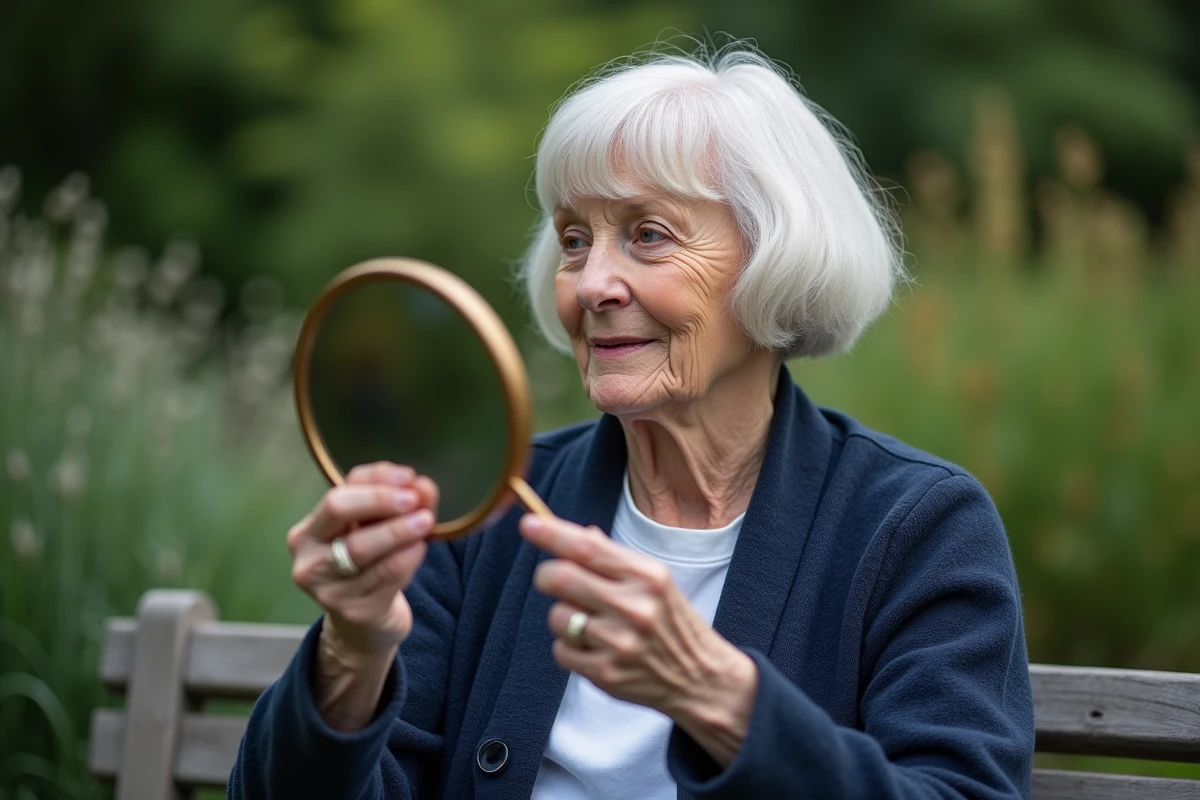
Textured cuts or structured cuts: the choice that changes daily life
Two main families of short cuts oppose each other on a rarely explained point. On one side, textured cuts (layered pixie, tousled boyish cut, short layered with movement). On the other, structured cuts (strict bob, geometric pixie, modernized bowl cut).
Why texture wins over fine hair
On hair that has lost density, an ultra-structured cut exposes every thinning area. The slightest cowlick or regrowth is visible. In contrast, a textured cut with strands of varying lengths blurs these imperfections and gives an impression of volume without volumizing products.
Textured cuts dry better on their own because they do not depend on a perfect fall. The irregular movement is part of the style. For white or gray hair, often coarser and more unruly than colored hair, this approach avoids the daily battle against frizz.
When a structured cut remains relevant
Some women maintain thick and relatively straight hair after 70. In this case, a short bob with a clean line can work effortlessly if the stylist adjusts the thickness through internal thinning. The condition: to accept regular visits to the salon to maintain the shape, usually every four to five weeks.
Short hairstyle and glasses after 70: adjusting the cut to the frame
Glasses are not an optional accessory for most women in this age group. The frame alters the perception of the face, and the cut must adapt to the arms and the line of the lenses, not the other way around.
- Temples deserve special attention: excessive volume in this area pushes the arms outward and creates an unflattering width effect. A gradual layering that thins the sides solves the problem.
- The length around the cheekbones determines whether the glasses integrate with the face or cut it in two. Strands that fall just below the frame arm soften the transition.
- The bangs, if present, should not hit the top of the frame. A curtain fringe opened at the sides or a very short micro-fringe avoids this visual conflict.
Specifying the type of frame worn (thin, thick, round, rectangular) during the appointment with the stylist allows for a much more precise adjustment than simply asking for “a short cut that goes with my glasses.”
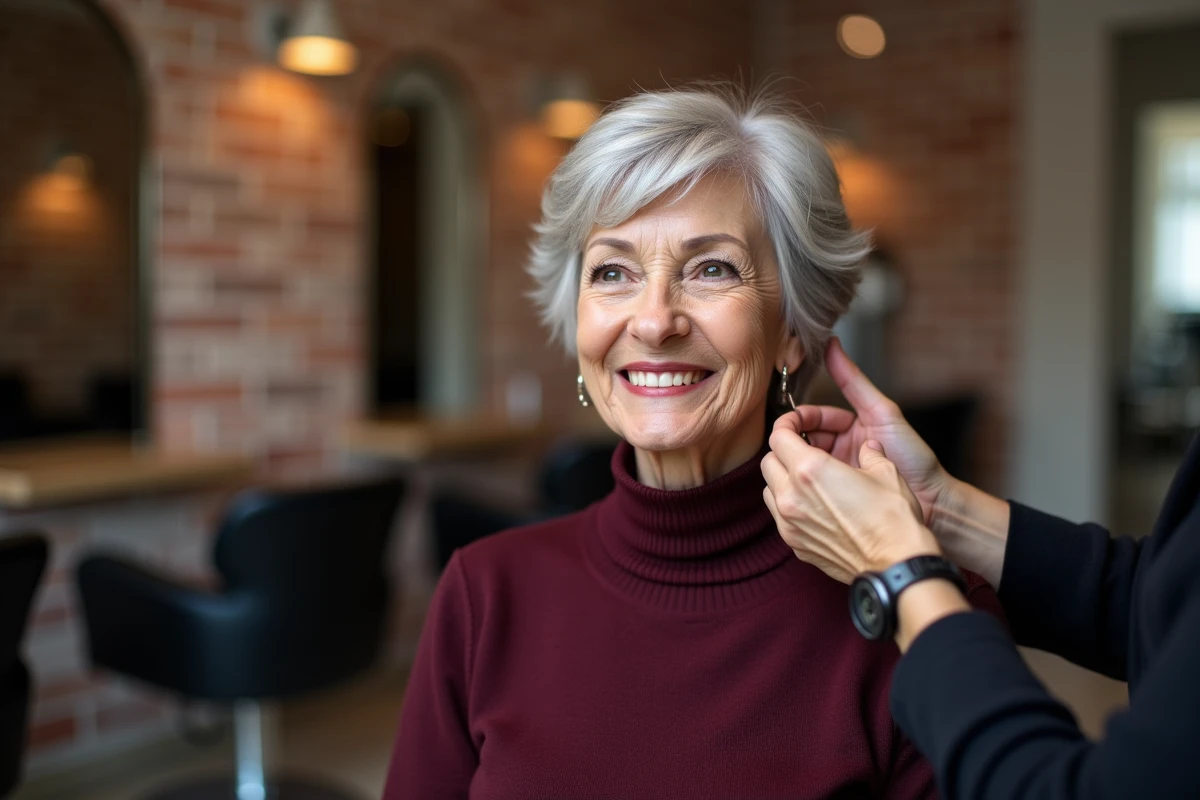
Minimal daily maintenance: gestures that replace styling
A well-thought-out cut reduces styling, but a few simple gestures maximize the result effortlessly. The goal is not to add a routine but to replace blow-drying with quicker, less tiring actions.
Drying hair with a microfiber towel reduces frizz in white hair much better than a classic terry towel. The action involves gently pressing, never rubbing. On a textured cut, the hair takes its natural shape in a few minutes.
A little styling wax, in a minimal amount (the size of a pea), worked between the fingers and then applied to the tips, is enough to define the movement of a pixie or a short layered cut. This gesture takes less than a minute and lasts all day.
For very fine hair that lacks hold, a light texturizing spray applied to damp hair before natural drying gives body without weighing it down. It’s better to use one well-chosen product than three layered products that end up flattening the hair.
Frequency of cuts and relationship with the stylist
Very short cuts (pixie, boyish) require regular maintenance to keep their shape. Allowing too much time between appointments transforms a neat cut into an amorphous mass, more difficult to style than medium-length hair. Planning a visit to the salon every four to six weeks remains the range that preserves both style and ease of maintenance.
The brief given to the stylist makes a real difference. Specifying that the priority is a result that holds without blow-drying, mentioning the wearing of glasses, and indicating the gestures one refuses to do every morning directs the cut towards a truly suitable result, rather than reproducing a photo spotted on social media.
Hair changes with the seasons, medical treatments, and hormonal variations. A cut that worked two years ago may no longer be suitable. Keeping an open dialogue with your stylist about the current texture, rather than the memory of your previous hair, remains the best lever to maintain an easy-to-live-with short hairstyle.